

A website can look modern and still feel frustrating to use.
Pages may load slowly. Buttons may lag. Content may jump around while someone is trying to read. Problems like these can quickly damage trust and push visitors away.
That is where core web vitals come in.
They are Google’s main measures for website performance and page experience. They focus on how fast, stable, and responsive a website feels for real users.
For businesses, this matters because user experience matters. A website that feels smooth and reliable is easier to use and more likely to support enquiries, sales, and customer trust.
The good news is that improving core web vitals does not always require a complete rebuild. In many cases, targeted improvements can make a noticeable difference.
Table of Contents
What Are Core Web Vitals?
These metrics measure how well a website performs for real visitors. Instead of focusing only on technical scores behind the scenes, they look at how people actually experience a page while using it.
Google currently focuses on three areas: loading speed, responsiveness, and visual stability.
Loading speed: Largest Contentful Paint measures how quickly the main content becomes visible. This is often the largest image, banner, or heading on the page. Slow loading can make a website feel sluggish before visitors even start engaging with the content. Google currently defines a good loading score as under two seconds. Pages taking longer than this are likely to feel slow to real users and may be flagged in performance reports.
Responsiveness: Interaction to Next Paint measures how quickly a page reacts when someone clicks, taps, or interacts with it. People expect websites to respond quickly. Even small delays can make a site feel unreliable, especially on mobile devices.
Visual stability: Cumulative Layout Shift measures whether elements move unexpectedly while the page is loading. Most people have tried to click something just as the layout shifts. It creates frustration and interrupts the browsing experience.
Together, these metrics show how your website feels in everyday use. Google’s web.dev resource explains these web performance metrics in more detail.
Why Core Web Vitals Matter
These metrics are not just technical benchmarks. They reflect the quality of the experience your website delivers to visitors, and that experience has a direct impact on your business.
Fast, stable pages simply feel better to use. Visitors can move through the site smoothly. They are not left waiting for content to load or dealing with layouts that shift.
When that experience breaks down, the consequences are practical. Slow pages and unstable layouts can push visitors away before they reach an enquiry form, a product page, or a call to action.
Research consistently shows that even a one second delay in load time can reduce conversions. For businesses that rely on their website to generate leads or sales, that is a meaningful commercial risk.
There is also a competitive dimension. In markets where several businesses offer similar services, a faster and more reliable website can be the difference between a visitor staying or leaving for a competitor.
They also support wider technical SEO work. Google has confirmed that page experience matters, but it is not a shortcut to rankings. Strong content, useful information, and clear site structure still play the biggest role. Core Web Vitals work best as part of a wider SEO and technical performance strategy.

How to Improve Core Web Vitals
Improving page experience usually starts with finding what is slowing pages down. It also means identifying anything that creates friction for users.
The aim is not to chase perfect scores. It is to create a website that feels quick, stable, and easy to use in real situations.
Businesses often ask how to improve core web vitals without rebuilding their entire site. In many cases, focused optimisation work can make a meaningful difference.
Make Key Content Load Faster
Heavy images, oversized banners, slow hosting, and unnecessary scripts can all reduce loading speed. Compressing images and reducing unused code can help pages load more quickly.
It is also worth reviewing whether every large visual element is genuinely needed. Simpler pages often perform better than overloaded designs.
Keep Pages Responsive
Delays in forms, buttons, menus, or mobile navigation can create a poor experience. These problems are often linked to heavy scripts or poorly optimised features running in the background.
Core web vitals optimisation may involve simplifying some features. It may also mean focusing on the tools visitors use most often.
Stop Layouts From Shifting
Unexpected movement during loading is frustrating for users. Images without fixed dimensions, late-loading banners, and pop-ups can all push content around the page.
Stable layouts help visitors stay focused and make the website feel more polished and trustworthy.
How to Check Your Core Web Vitals
Businesses do not need expensive software to start improving core web vitals.
Google provides free tools that make it easier to spot performance issues and prioritise improvements.
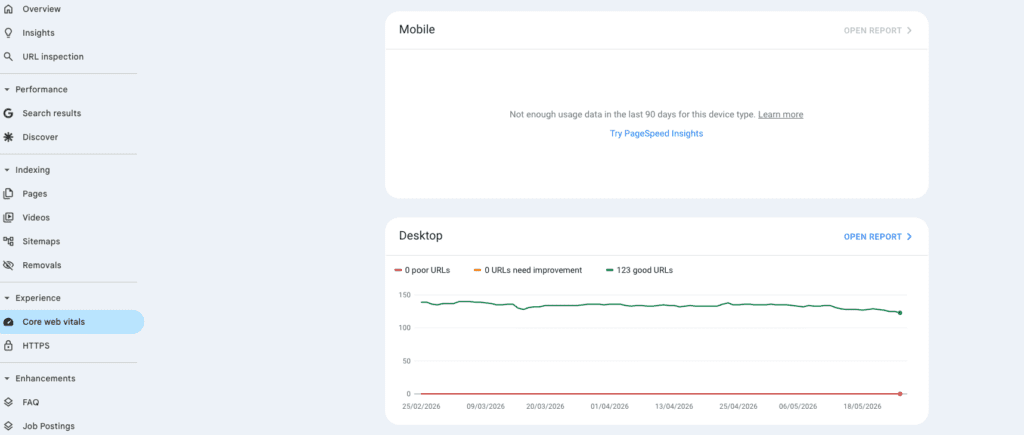
Google Search Console: The core web vitals report highlights groups of pages that may need attention. This helps businesses identify patterns across the site rather than checking pages one by one.
PageSpeed Insights: This tool provides page-level performance information and practical suggestions for improvement. It can show where problems exist and support more focused core web vitals improvement work.

Resources from web.dev and PageSpeed Insights can also help explain performance metrics in more detail.
When Core Web Vitals Need Expert Attention
Some performance issues are simple to fix. Others are linked to deeper technical problems or outdated site structures.
These metrics often connect with wider SEO, technical optimisation, and web design work. That is why a joined-up approach usually delivers better long-term results.
Solve helps businesses identify website performance issues and prioritise the right fixes. Sometimes that means addressing image sizes or script loading. In other cases it involves reviewing hosting, site architecture, or how third party tools are affecting performance. Because these issues often overlap with wider SEO and web design work, fixing them tends to have a broader positive effect on the site overall.
In many cases, improvements to page experience also support stronger engagement, better conversion rates, and greater customer trust at the same time.
Build a Faster, Stronger Website
These performance signals help businesses understand how their website feels to real users.
They highlight issues with speed, responsiveness, and stability. The bigger goal goes beyond technical scores. It is about creating a website that feels smooth, reliable, and easy to use.
Small improvements can make a noticeable difference. Faster pages help visitors move smoothly through your site. Responsive interactions and stable layouts also create a better experience.
Over time, this supports stronger engagement, better SEO performance, and greater customer trust.

Need support with your core web vitals?
Speak to Vicki – She’s ready to help propel your online business
FAQs
What Affects a Core Web Vitals Score?
Large images, slow servers, heavy scripts, and poorly optimised layouts are common causes. Delayed loading and shifting content can also affect performance.
Do Core Web Vitals Still Matter in 2026?
Yes. Google updated its performance thresholds in early 2026, making the standards stricter rather than relaxing them. Core Web Vitals remain a confirmed part of how Google evaluates page quality. They are not the most important ranking factor on their own, but they contribute meaningfully alongside content quality and site authority. For businesses in competitive markets, meeting the thresholds is increasingly the baseline expectation rather than a bonus.
Can Core Web Vitals Be Improved Without Rebuilding a Website?
Yes. Many websites can improve performance without a full redesign. Targeted optimisation work is often enough.
How Often Should Core Web Vitals Be Checked?
They should be reviewed regularly, especially after updates, design changes, or new features. Ongoing monitoring helps catch problems before they affect users.