Tourism SEO is the process of optimising a travel or tourism website so it ranks higher in search engine results, gets found by the right people, and ultimately drives more bookings.
In one of the most competitive industries online, where travellers compare dozens of options before committing to a single click, visibility in search is the difference between a full calendar and an empty one. With around 70% of all travel and tourism sales now made online, businesses that are not discoverable in search are quietly handing customers to their competitors.
Whether you run a hotel, a tour company, a travel agency, or a visitor attraction, this guide covers everything you need to know about tourism SEO in 2026: what makes it unique, which strategies matter most, and how to choose the right support to get results.
Table of Contents
What is Tourism SEO?
Tourism SEO is the practice of optimising travel and tourism-related websites so they rank higher in search engine results pages (SERPs), attract more relevant visitors, and convert that traffic into bookings, enquiries, or direct sales. It covers everything from keyword research and content strategy to technical website health, local search visibility, and link building, all applied through the specific lens of how travellers search, compare, and book online.
Unlike SEO in many other industries, tourism SEO has to account for high search volumes, intense competition from major platforms like Booking.com and TripAdvisor, strong seasonal fluctuations, and the fact that most travellers visit a website multiple times before converting. Getting it right means meeting potential customers at every stage of their journey, from the first moment of inspiration through to the final booking decision.
How Travellers Search, and Why It Matters for Tourism SEO
Understanding how people search when planning travel is fundamental to any tourism SEO strategy. The journey typically moves through four stages:
- Dreaming – the traveller has no fixed plans but is open to inspiration. Search terms at this stage are broad: “best places to visit in autumn” or “family holiday ideas Europe.” Content like destination guides, listicles, and inspirational blog posts performs well here.
- Planning – a destination or type of experience has been chosen. Searches become more specific: “things to do in Cornwall in September” or “boutique hotels Padstow.” This is where strong local SEO and well-optimised destination pages earn visibility.
- Booking – the traveller is ready to commit. Searches are high-intent: “book sea safari Cornwall” or “Trevose Golf Club green fees.” Your booking pages, product pages, and service pages need to be clearly optimised for these conversion-ready terms.
- Experiencing – the traveller is on location and searching in real time: “restaurants near me,” “best coastal walks near Padstow.” Local SEO and a strong Google Business Profile are the key tools at this stage.
Building content and optimising pages for each stage of this journey, rather than just targeting booking-ready keywords, significantly improves your overall tourism SEO performance.

What is Tourism SEO?
Many characteristics of tourism SEO overlap with regular SEO, such as keyword research, building backlinks, and optimising your images. When implemented effectively, a great tourism SEO strategy helps travel websites become more visible in search engine results pages (SERPs).
However, the tourism industry faces some unique challenges. For example, most users will use generic search terms to find holiday and travel information, rarely converting on the first visit because of high costs and the need to compare options. This means there are a lot of potential keywords to target, and there will be additional SEO strategies required to get repeat visits.
If you are to build a tourism SEO strategy that meets seasonal demand and user intent whilst helping customers on their journey around your website, then you’ve got a good chance of retaining the interest of prospective customers and grabbing that all-important sale.

Our Definition of a Tourism Business
Tourism is a dynamic, multifaceted industry that revolves around providing services and experiences to travellers. The tourism industry encompasses a huge range of businesses, from hotels and resorts, to tour operators, travel agencies, airlines, restaurants, and attractions.
A successful tourism business needs to do more than just offer services and make profits. To lead the competition, it will need to understand the needs and preferences of travellers, adapt to changing trends, provide exceptional customer service, promote sustainable practices and stay up to date with the latest technologies.

What Makes Tourism SEO Unique?
The tourism industry requires a unique approach to SEO. Local SEO and video/image SEO take higher priority than they do in other industries so this should be the cornerstone of your tourism SEO strategy.
Another aspect that makes tourism SEO unique is the emphasis on location-based keywords. Travellers often search for specific destinations or attractions, so it’s crucial to optimise website content with relevant location-based keywords. For example, a hotel in New York City would want to rank highly for keywords like “hotels in NYC” or “accommodation in Manhattan.” This requires careful keyword research and strategic implementation to ensure that the website appears in search results when potential tourists are looking for information about a particular location.
Another distinctive feature of tourism SEO is the importance of content marketing. Travellers are looking for valuable and engaging content that informs and inspires them to book that trip or experience. By illustrating what you offer with attention-grabbing articles, informative blog posts, inspiring videos, and dreamy social media content, you can highlight the unique aspects of a destination.
By creating high-quality content that is properly optimised for search engines, tourism websites can attract more visitors and establish themselves as authoritative sources of information that customers can trust.
The Importance of Tourism SEO
The competition in the tourism industry is fierce. The aim of tourism SEO is to promote your business, provide value for your customers, and increase brand awareness. To remain ahead of the curve and to attract more customers, travel and tourism companies need to implement an effective tourism SEO strategy so they don’t get left behind. SEO also improves customer loyalty by ensuring your website is easier to use and more visually appealing.
SEO for Hotels and Accommodation
For hotels and accommodation websites, local SEO is paramount. Optimise your Google Business listing, include accurate location information on your website, and leverage location-based keywords in your online content and blog posts. Local SEO enhances your visibility for travellers searching for accommodations in your specific area, helping you stand out in a crowded marketplace.
Local landing pages should be carefully targeted for each city or area in which you operate. These carefully targeted pages will provide information about your services in the local area and help attract customers. Creating these pages enables you to target specific keywords related to each location and improve your search engine rankings.
Garnering good reviews from customers is a strong foundation of any SEO strategy for hotel and accommodation providers. The more satisfied guests you have, the better your reputation and the more likely new visitors are to book with you. Having good reviews not only signals trust to future clients, but Google will see you as an authority and raise your website up the search results accordingly, getting you seen online.
An online customer survey conducted by Trustpilot found that an overwhelming 88% of respondents said reviews played an important role in influencing their purchase and that they trust online reviews as much as a personal recommendation.
One of the best ways of generating reviews is via your Google Business Profile. When potential customers search for your accommodation, they’ll not only see your Business Profile, but they’ll also see Google Reviews from your past customers displayed next to your business profile in Maps and Search which gives them all the information they need in one place.
Gathering reviews anywhere and everywhere your customers might be looking for hotels and accommodation will serve you well when building an online presence. Using travel review platforms such as Tripadvisor, Trustpilot, Facebook Business and Expedia will ensure you get your excellent reputation seen where it counts. Responding to reviews, both positive and negative, demonstrates your commitment to guest satisfaction and positively influences both potential guests and search engines alike.

SEO for Travel Agencies
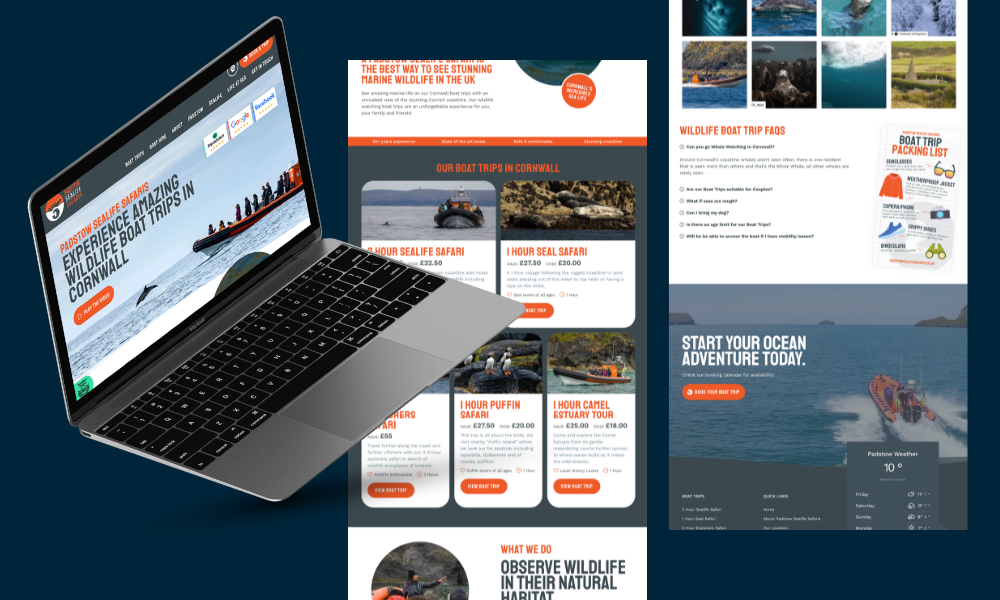
High-quality images are not only a must for enticing potential guests, but they can also make or break your tourism SEO strategy. Whilst high-quality images depicting the travel experiences you offer are vital to selling the dream to potential customers, it is also important to ensure that the images you use on your website contribute to optimum user experience, website performance and search ranking. This can be achieved through techniques like reducing image file size to optimise site load speed and adding relevant metadata needed for image search, including alt tags which are used by both search engines and visually impaired users.
Using brand-specific, aspirational images on your travel agency website can help guide users through the buying process, increase the amount of time users stay on the page, boost your brand authority and increase the shareability of your content. All of which will help your SEO.
Images don’t always have to be images in the classic sense of lust-worthy photos of golden beaches and sunsets. You can use (branded) graphs, charts, graphics, infographics, embed social media posts or even add GIFs. All of these will enrich your web pages and provide more content to rank in image search.

SEO for Attractions, Tours and Things to Do
Imagine keywords as the breadcrumbs leading travellers to the doorstep of your attraction or tour. When planning an effective SEO strategy for your tourism business, it’s important to first conduct thorough research to identify the keywords your potential guests are searching for.
Creating compelling, shareable blog posts and social media content will help to build your brand reputation, offering more opportunities to rank in the SERPs through keyword integration.
Engaging, informative, and relevant content not only captivates your audience but also signals to search engines that your website is a valuable resource. It’s important to strike a balance between optimisation and readability for a compelling user experience. From location-specific terms to amenities and unique selling points, you should integrate these keywords naturally into your website’s content, meta tags, and headings.
Regularly update your blog and website landing pages with content that answers common traveller questions, highlights local attractions, and showcases the unique experiences your tour or service offers.
Key Elements of Tourism SEO Strategy
In the dynamic world of digital marketing, SEO is the compass guiding travellers to your hotel’s doorstep. By understanding and implementing the principles of SEO, you not only enhance your online visibility but also create a user experience that captivates and converts Spotential guests. Invest time and effort into optimising your digital presence, and watch as your hotel ascends the ranks in the online realm. Remember, in the world of tourism SEO, the journey is just as important as the destination.
Give Local Some Love
Local SEO is your secret weapon to connect with tourists looking for their perfect destination. Claim your Google My Business listing, encourage reviews, and make sure your business details are accurate. This not only boosts your local search visibility but also enhances your credibility as a go-to spot in the area.
Speedy Sites Win the Race
In the breakneck competitive world of tourism, it’s vital that you optimise your site’s speed for a seamless user experience. A fast-loading site not only pleases impatient travellers and stops them from clicking away to a rival’s website, but also earns brownie points with search engines.
Boosting Backlinks
Think of backlinks as the global network connecting your site to the rest of the internet. High-quality backlinks from reputable travel blogs, directories, and influencers act like travel endorsements, boosting your site’s credibility. Build relationships, collaborate, and let your website become the talk of the digital town.
Mobile Matters
Google loves mobile-responsive sites, and so do your potential guests. In the era of on-the-go exploration, your website must be as mobile-friendly as a well-worn backpack. Ensure seamless navigation, fast load times, and a user-friendly experience across all devices. Your audience should feel like they’re jet-setting through your website, no matter the screen size.
Captivating Content
Engaging and relevant content isn’t just king; it’s the crowned ruler of the SEO kingdom. From vivid destination guides to insider tips and awe-inspiring visuals, make sure your content is a one-way ticket to wanderlust.
Keywords are King
SEO without keywords is like a passport without stamps – incomplete. Unearth the keywords that travellers are typing into search engines. Are they dreaming of “tropical beach getaways” or seeking “ski trips in Alaska”? Carefully use and optimise these golden keywords throughout your website, ensuring that search engines recognise your site as a top destination.
Righteous Reviews
Reviews are the diamonds in the rough of user-generated content. Travellers share their stories and provide authentic experiences which is a treasure trove for SEO. It adds relevant keywords, paints a compelling picture of what your business offers, and gives search engines fresh, dynamic content to index.

Tourism SEO and AI Search in 2026
An increasing proportion of travel searches now trigger Google’s AI Overviews, which summarise answers at the top of the results page before any traditional organic listings appear. For tourism businesses, this changes what it means to rank well. Appearing in an AI Overview can deliver brand visibility even to searchers who never click through to your website – and being cited as a source in those summaries is becoming a meaningful new measure of SEO success.
Google’s AI tends to favour content that gives a definitive, useful answer over content that hedges or sells. To improve your chances of appearing in AI-generated travel summaries, focus on writing clear, structured content that directly answers specific questions. Use subheadings that mirror what travellers actually search for. Include concrete details – locations, timings, prices, what to expect – rather than vague promotional language.
Voice search is also a growing factor in tourism discovery. Travellers increasingly ask their phones questions like “what are the best things to do near Padstow” or “find me a B and B in Cornwall with sea views.” These conversational queries favour content that includes natural language and question-based headings. An FAQ section on each key page is one of the most practical ways to capture voice and AI-driven searches.
Technical SEO for Tourism Websites
No matter how good your content is, it will struggle to rank if the technical foundations of your website are weak. Technical SEO is particularly important for tourism websites, which often carry large numbers of pages, high-resolution images, booking engines, and dynamic content – all of which create specific challenges for search engine crawling and indexing.
Page Speed and Core Web Vitals
Tourism websites are image-heavy by nature, which puts them at high risk of slow load times. Google uses Core Web Vitals (a set of performance metrics measuring loading speed, interactivity, and visual stability) as a direct ranking factor. Compress images without sacrificing quality, use modern file formats like WebP, implement lazy loading, and consider a content delivery network (CDN) to serve pages faster to users in different locations.
Mobile Optimisation
The majority of travel searches now happen on mobile devices. A tourism website that is slow, hard to navigate, or difficult to book through on a phone is not just a poor user experience – it will rank lower because of it. Google uses mobile-first indexing, which means it assesses your mobile site when deciding how to rank you, even for desktop searches. Every page, booking flow, and contact form needs to work flawlessly on a small screen.
Schema Markup and Structured Data
Schema markup is code added to your website that helps Google understand what your content is about and display it more prominently in search results. For tourism businesses, the most useful schema types include:
- LocalBusiness schema – confirms your business name, address, contact details, and opening hours to Google.
- Review schema – displays star ratings directly in search results, which increases click-through rates significantly.
- Event schema – if you run tours, activities, or seasonal experiences, event schema can display dates and availability in search results.
- FAQ schema – adds expandable questions and answers directly beneath your listing in Google, giving you additional visibility without requiring a higher ranking.
Adding structured data is a technical task but a high-value one. For tourism businesses competing in crowded SERPs, schema markup can meaningfully improve click-through rates even when your ranking position stays the same.

Seasonal SEO for Tourism
Seasonality is one of the defining challenges of tourism SEO and one that sets it apart from almost every other industry. Search demand for tourism keywords does not flow evenly throughout the year – it surges and dips based on school holidays, weather patterns, local events, and booking lead times. A tourism SEO strategy that does not account for this will consistently miss its best opportunities.
Plan Content Around Search Peaks, Not Booking Peaks
People search for summer holidays in January and February. They research Christmas market trips in September. If you publish your seasonal content at the time you want people to book, it is already too late – Google needs weeks or months to index and rank new content, and your competitors who planned ahead will already own those rankings.
Map your content calendar to when search demand begins to rise, not when bookings peak. Use Google Search Console and Google Trends to identify when interest in your key seasonal terms starts to build, then publish and optimise content well in advance of that window.
Update Evergreen Pages Rather Than Creating New Ones
Rather than creating a new blog post every year for “things to do in Cornwall this summer,” update and strengthen an existing page each season. This consolidates your ranking signals onto a single strong URL rather than splitting them across multiple thin pages, and it gives Google a page with a track record rather than something brand new.
Common Tourism SEO Mistakes to Avoid
When you run a tourism business it’s vital that you adapt to the ever-changing landscape of the travel industry and react accordingly.
Don’t journey blindfolded into the digital unknown. Analysing your website’s performance and scrutinising the data regularly is key to understanding what works and what doesn’t for your website’s SEO. Use insights to fine-tune your tourism SEO strategy, identify popular content, and adapt to the ever-changing digital terrain.
The main mistake to avoid? Not optimising or considering SEO at all and just hopping people find you online. Every site needs some love and attention to make the most of what search results can offer.

Choosing Between In-House vs SEO Agency for Tourism SEO
If you are searching for a tourism SEO company or tourism SEO services, one of the first decisions you will face is whether to bring the work in-house or partner with an agency. Both approaches can work, but the right answer depends on the scale of your ambitions, the resources you have available, and how quickly you need results.
Choosing whether to implement your ongoing tourism SEO strategy using an in-house team or outsourcing it to an agency specialising in SEO can be a tricky conundrum. Unless you’re a jack of all trades with limitless resources, it sometimes pays to ask for a helping hand. And this is especially important in the world of travel and tourism.
SEO is a multifaceted, ongoing marketing strategy with many strands. SEO agencies often have a team of specialists, each proficient in different aspects of SEO. This diversity of expertise ensures a comprehensive and holistic approach to your digital strategy.
Whilst you might have a skilled SEO expert in-house, a key advantage of using an SEO agency is the breadth and diversity of their collective knowledge. An SEO agency offers specialist SEO solutions and support. Often team members will be dedicated to specific optimisation elements like outreach, backlinks, keyword research, or content. They are skilled professionals with industry-leading experience, tools and expertise who work collaboratively to improve their clients’ ranking, conversion, and online sales.
Regularly reviewing and optimising your website is essential for improving the experience of your website visitors and keeping up with the ever-evolving search engine algorithms. SEO agencies can quickly adapt to the evolving needs of your tourism business and redivert their targeting accordingly.
Agencies work with a range of clients, gaining insights into various industries and market trends. This broad perspective can bring fresh and innovative ideas to your tourism SEO strategy and result in lucrative collaboration opportunities.
For many businesses, hiring an agency can be more cost-effective than maintaining a full in-house team. You pay for the services you need without the overhead of salaries and benefits.
To learn more about deciding between SEO in-house vs outsourcing, why not check out our handy blog.
Let us Solve Your Tourism SEO Issues
Solve is a B Corp certified SEO agency based in Cornwall with extensive experience working with tourism and hospitality businesses across the South West and beyond. Our tourism SEO services cover everything from technical audits and keyword strategy to content creation, local SEO, and ongoing performance tracking – all built around the specific challenges and opportunities of the travel industry.
If you are looking for a tourism SEO company that understands the seasonal pressures, the competition from OTAs, and the importance of driving direct bookings rather than just traffic, we would love to talk.
Get in touch with the Solve team to discuss how tourism SEO can work for your business.
Concluding Thoughts- The Importance of Tourism SEO
A well-crafted, finely-targeted tourism SEO strategy shouldn’t be complicated. If you follow the guidelines mentioned above, you should be able to attract new business while keeping existing customers loyal and coming back for more.
Don’t be put off by presuming tourism SEO is an onerous task. With the right support, you can introduce a few vital stages at a time and leave the technical side to an agency specialising in SEO. We are here to help and guide you through every step of the process so that your travel business gets the success it deserves!

Get help with Tourism SEO that will help propel your business to online success.
Speak to Anna – One of Our SEO Experts.
Tourism SEO FAQs
What is Tourism SEO?
Tourism SEO is the process of improving a travel or tourism website’s visibility in search engines through keyword research, content creation, local SEO, technical optimisation, and link building. It is tailored to the specific challenges of the travel industry, including high competition, seasonal demand, and the need to reach travellers at every stage of their journey from initial inspiration through to booking.
Why is Tourism SEO Important for tourism businesses?
SEO is important for tourism businesses because the vast majority of travellers research and book online. Appearing at the top of search results for relevant queries puts your business in front of people who are actively looking for what you offer. Strong SEO also reduces dependence on OTAs and paid ads, drives direct bookings, and builds long-term visibility that continues to deliver results without ongoing ad spend.
How Does Tourism SEO Differ from Regular SEO?
While it shares common elements with regular SEO, tourism SEO places a greater emphasis on local SEO, location-based keywords, and content marketing that appeals specifically to travellers’ interests and needs.
What Role Do Reviews Play in Tourism SEO?
Reviews significantly influence customer decisions and can improve a business’s search ranking. An overwhelming 88% of people trust online reviews as much as personal recommendations, highlighting the importance of managing your online reputation effectively.
How Important Are High-Quality Images in Tourism SEO?
Vital. High-quality, brand-specific images enhance user experience, website performance, and search rankings. They help sell the dream of travel and encourage users to spend more time on your website.
What does a tourism SEO company do?
A tourism SEO company helps travel businesses rank higher in search results by auditing their website, developing a keyword strategy, creating optimised content, improving technical performance, and building authority through backlinks. A specialist tourism SEO company will also understand the seasonal nature of the industry, the competitive landscape of OTAs, and the importance of local search for destination-based businesses.
Should I Handle SEO In-House or Hire an Agency?
This depends on your resources and expertise. SEO agencies offer a breadth of experience and can provide a comprehensive approach to your digital strategy, potentially offering more cost-effective and innovative solutions.
How do I do SEO for a tourism website?
To do SEO for a tourism website, start with keyword research to understand what your target audience is searching for at each stage of their travel planning. Optimise your key pages with those keywords, create useful and informative content such as destination guides and local area blogs, claim and optimise your Google Business Profile, ensure your site loads quickly on mobile, and build backlinks from relevant travel and local directories. Tracking your performance in Google Search Console will help you refine your strategy over time.