
Learning how to get backlinks is one of the most valuable things you can do for your website’s SEO. Backlinks, links from other websites pointing to yours, are still one of Google’s strongest trust signals. But the way you earn them has changed considerably. In 2026, it is less about collecting as many links as possible and more about earning the right ones from sources that carry genuine authority and topical relevance.
At Solve, we build backlinks for clients as part of our SEO services. This guide covers every strategy we use and recommend, from quick wins you can act on today to longer-term approaches that build lasting authority.
Table of Contents
Why Backlinks Still Matter in 2026
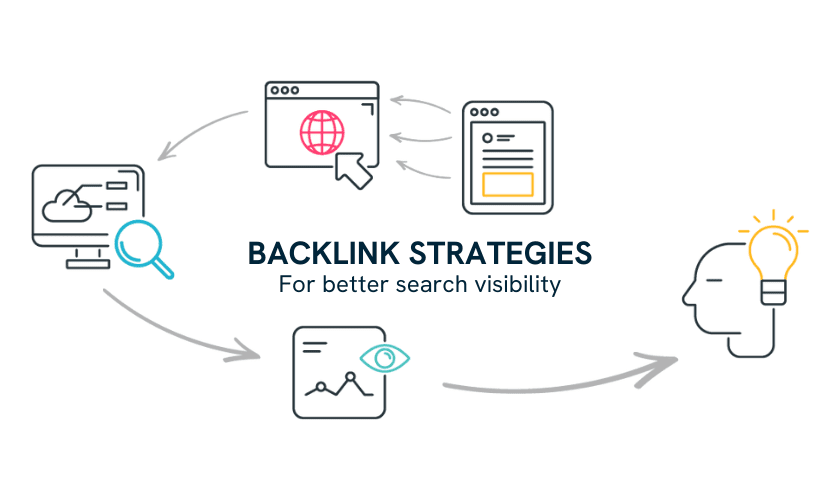
Backlinks remain one of the most important ranking factors in SEO. When a reputable website links to your content, it sends a signal to Google that your page is worth recommending. The more of those signals you earn from relevant, trusted sources, the more authority your site builds over time.
In 2026, the way you think about link building has shifted. Backlinks are no longer just about chasing PageRank. The brands winning today are those earning consistent mentions across publications, directories and podcasts, building the kind of recognised presence that gets cited by both search engines and AI systems like ChatGPT, Perplexity and Google AI Overviews.
In other words, a strong backlink profile in 2026 does two jobs: it helps you rank in traditional search results and it helps AI-powered tools recognise your brand as a credible source worth recommending. That is a shift worth understanding before you start building links.
What Makes a High-Quality Backlink?
Not all backlinks are equal. One strong link from the right source is worth more than dozens of weak ones. Here is what to look for:
- Topical relevance The linking site covers topics closely related to yours. A link about SEO from a marketing blog carries far more weight than the same link from a home improvement site.
- Real audience and traffic A site with a high domain rating but zero genuine traffic is likely a link farm. A site with a domain rating of 40 and 50,000 monthly visitors is far more valuable. In 2026, entity strength and authentic engagement matter more than a DA score alone.
- Editorial standards The site publishes quality content, vets what it links to, and does not sell links indiscriminately. These are the backlinks Google will reward.
- Dofollow vs. nofollow Dofollow links pass SEO authority to your site. Nofollow links do not pass authority directly, but they can still drive referral traffic and add variety to a natural-looking link profile. Both have a place.
- Anchor text The clickable text of the link should be descriptive and relevant, but not stuffed with exact-match keywords. A natural mix of branded, contextual and URL-based anchor text looks far healthier to Google than a profile full of identical keyword anchors.
How to Get Backlinks: 11 Strategies That Work
1. Turn Unlinked Brand Mentions into Links
This is the fastest win available to most businesses. If someone has already mentioned your brand online without linking to you, a short, friendly email asking them to add a link is often all it takes.
Unlinked mentions are the fastest backlinks you can earn because the publisher already knows your brand. When you reach out, suggest the most helpful page for their readers to visit and frame the request around usefulness rather than entitlement. Use Google Alerts to track mentions of your brand name for free, or a tool like Ahrefs or Semrush’s Brand Monitoring for a more thorough sweep.
2. Create Content Worth Linking To
The most sustainable backlink strategy is also the simplest: publish content that other people in your industry genuinely want to reference. Educational guides, original research, insightful blog posts and useful infographics attract links naturally. When your content provides unique value, other websites are more likely to cite it as a resource.
Original data is particularly powerful. If you can compile industry statistics or publish a study with findings that do not exist elsewhere, you give other writers a reason to link to you every time they reference that data. Think about what you know from your own client work that the rest of your industry does not have access to.
3. Build a Free Tool or Linkable Asset
One of the most powerful and passive ways to earn backlinks is to build something genuinely useful and put it on your website for free. A tool, calculator, checklist or template that solves a real problem in your industry will keep earning links long after you have built it, without any ongoing outreach effort.
Think about the questions your clients ask you most often. Could you turn the answer into an interactive tool? For Solve, that might be a website audit checker, an SEO score calculator or a content brief template. For a law firm, it might be a GDPR compliance checklist. The format matters less than the usefulness.
Free tools are some of the best backlink magnets available because they solve a problem immediately, create a natural reason to share, and stay useful long after launch. When other writers in your industry want to recommend a resource to their readers, they link to tools far more readily than they link to blog posts, because tools do the work for the reader rather than just describing it.
If building a bespoke tool feels out of reach, a well-designed downloadable checklist or a genuinely comprehensive guide that does not exist elsewhere can perform a similar role. The key is that it has to offer something other pages do not.
4. Guest Posting on Relevant Sites
Guest posting remains one of the most reliable ways to earn high-quality links. You write a piece of genuinely useful content for another website in your industry and, in return, you get a link back to your site, usually in the author bio or naturally within the body of the article.
In 2026, bulk guest posting is a fast track to a Google penalty. To get backlinks from high authority sites, you need to treat guest posting as digital PR: writing for a major industry site gives you the link authority and the brand association, while writing for a smaller, highly engaged niche blog drives direct referral traffic from your ideal audience.
To find guest posting opportunities, search Google for your topic plus “write for us” or “contribute an article”, follow other guest bloggers in your space and reach out directly to editors at publications you respect.

5. Digital PR and Journalist Outreach
Getting quoted or featured in press coverage is one of the most powerful ways to earn editorial backlinks from high-authority domains. Connectively (formerly HARO) connects you with journalists who are actively looking for expert sources. Respond quickly and make sure you are offering genuine insight rather than a sales pitch.
Consistent brand mentions in national and trade outlets train large language models like Gemini and ChatGPT to associate your name with specific industry expertise, which is increasingly important for AI-driven search visibility.
Our PR and outreach service handles this process for clients who want the results without the time investment.
6. Broken Link Building
This strategy involves finding links on other websites that lead to dead pages and reaching out to suggest your content as a replacement. Website owners generally do not want to send their visitors to a 404 error, so if you have a relevant piece of content that fits, they have a genuine reason to swap the link.
Use Ahrefs or Screaming Frog to find broken pages on competitor sites or resource pages in your industry. Check how many sites are linking to the broken page, then create or identify a strong replacement and reach out with a helpful, personalised email.
7. Reclaim Lost Links
If you have changed URLs, migrated your website or deleted old pages, some of your existing backlinks may now be pointing to dead pages on your site. These are easy wins because the link already exists. You just need to fix the destination.
Use Google Search Console to identify 404 errors and a backlink tool to see which external sites are pointing to those broken pages. Set up a 301 redirect to the most relevant live page and you reclaim the link equity with no outreach required. For a deeper look at your redirect setup, our WordPress maintenance team can help.
8. Get Featured in “Best Of” Lists and Resource Pages
Many websites publish curated lists of the best tools, agencies or resources in a given category. Being included in these gives you a quality backlink and targeted referral traffic from readers who are actively looking for what you offer.
Search for lists relevant to your business using terms like “best [service] in [location]” or “top [industry] agencies UK” and reach out to the site owners. Make a clear case for why you deserve to be included and what value your inclusion adds to their readers.

9. Build Local Citations
If you are a UK business targeting local customers, citations are an important part of your backlink strategy. A citation is a mention of your business name, address and phone number on a trusted directory. Consistent, complete citations across sites like Google Business Profile,Yell, Bing Places and industry-specific directories help Google verify that your business is legitimate and improve your local search rankings.
Make sure the details are identical across every listing. Discrepancies in your name, address or phone number can weaken the trust signal. Our SEO packages include local citation building as standard.
10. Analyse Competitor Backlinks
One of the smartest shortcuts in backlink building is looking at where your competitors are already getting their links and targeting the same sources. If a site is willing to link to them, there is a reasonable chance they would link to you too.
Use Ahrefs Webmaster Tools (free version available) or Semrush to pull a list of your top competitors’ referring domains. Filter for sites that link to multiple competitors but not to you. These are your highest-priority targets. This approach ensures every outreach email you send is going to a source that has already demonstrated it links within your space.
11. Appear on Industry Podcasts
Podcast appearances are one of the most underused link building tactics for UK businesses. Most podcasts publish show notes for every episode, and those show notes almost always include a link to each guest’s website. A single appearance earns you a link from a relevant, editorial source with a real audience.
Beyond the link itself, podcasts build topical authority in a format that AI systems are increasingly drawing from. Transcripts, show notes and episode descriptions are all content that tools like ChatGPT, Perplexity and Google’s AI Overviews can extract and reference when building their understanding of who the experts are in a given field.
What to Avoid
Some tactics can do more harm than good. The margin for error in link building in 2026 is slim. Buying cheap links is a guaranteed path to algorithmic filtering or penalties.
Over-prioritising domain authority while ignoring relevance and real traffic is equally risky. A diverse backlink profile that looks natural to Google is built over time through a mix of strategies, not through shortcuts.
Specifically, avoid:
- Buying bulk links Paid link schemes that are not editorially placed are against Google’s guidelines and carry a real penalty risk.
- Over-optimising anchor text A profile full of exact-match keyword anchors looks unnatural so use a varied mix.
- Irrelevant links A link from a site that has no topical connection to yours adds almost no value and can look suspicious.
- Too many links from the same domain The first link from a high-authority domain passes considerable authority to your site, but a second link from the same domain passes significantly less. Prioritise new referring domains over repeat links from sites you already have.
- Neglecting your internal links. The authority that backlinks pass into your site needs somewhere to go. If your key service pages or product pages have no internal links pointing to them from your well-linked blog content, that authority sits on the landing page and goes no further. A well-executed internal linking strategy makes sure every backlink you earn works as hard as possible across your whole site.
- Overlooking testimonial link building. If you use software, tools or services as part of your business, you are sitting on an easy and often overlooked source of high-quality backlinks. Reach out to those companies and offer to write a testimonial. Most businesses actively want customer testimonials and will publish yours on their website with a link back to yours, often from a homepage or a dedicated customer page with strong domain authority.
Getting Cited by AI Search Tools
In 2026, learning how to get backlinks is not just about ranking in Google’s traditional search results. AI-powered tools including Google AI Overviews, ChatGPT and Perplexity are now pulling answers directly from the web and recommending sources to their users. If your content is well-structured, credible and regularly updated, there is a real opportunity to be one of those sources.
AI-powered overviews evaluate sources based on credibility, freshness and structure. It is not enough to have backlinks. They must come from sources the AI trusts, and how your content is built plays a significant role in whether AI systems surface it.
The best brands in 2026 are earning backlinks and co-citations, training the internet to associate their name with the right topics. Being mentioned alongside recognised industry leaders is increasingly as important as the link itself. When your brand consistently appears in the same conversations as trusted names in your field, AI tools begin to recognise you as part of that landscape.
If you want help making your content AI-visible as well as search-visible, our SEO team can audit your current setup and recommend the right changes. We also offer a dedicated AI SEO service for businesses who want to get ahead of this shift.
How to Check Your Backlinks
Keeping an eye on your backlink profile is just as important as building it. Links can disappear, turn toxic or point to broken pages over time. Here are the tools we recommend:
- Google Search Console – Free and essential. Shows you which sites are linking to you and flags any manual actions related to unnatural links.
- Ahrefs Webmaster Tools – The free version gives you a solid snapshot of your backlink profile, including lost and broken links.
- Semrush – A more comprehensive paid option for ongoing backlink monitoring and competitor analysis.
If you spot links from spammy or irrelevant sites, you can use Google’s Disavow Tool to tell Google to ignore them, though this should be used carefully and sparingly.
Need help building a backlink profile that actually moves the needle? Our PR and outreach team works with businesses across the UK to earn high-quality editorial links. Get in touch to find out how we can help.
How to Build Backlinks and Other FAQs
What is the fastest way to get backlinks?
The quickest wins are almost always the ones that already exist. Start by finding unlinked mentions of your brand online using Google Alerts or Ahrefs, then email those sites and ask them to add a link. After that, check your own site for 404 errors with links pointing to them and redirect those pages to recover the equity instantly. Both tactics can produce results within days, with no content creation required.
How do I get backlinks for free?
The best free routes are unlinked mention outreach, broken link fixes, guest bios, association pages, expert commentary, and genuinely useful assets such as glossaries, templates and simple tools. Google Search Console is free and shows you which sites are already linking to you. Ahrefs Webmaster Tools has a free version that lets you audit your backlink profile and check competitors. Time is still the cost, but the cash outlay can stay very modest if your outreach is focused.
Do I need hundreds of backlinks to rank?
In 2026, 10 highly relevant links from sites in your industry will outperform 100 generic ones. Use a tool like Ahrefs to check how many referring domains the pages currently ranking for your target keyword have, and use that as your benchmark. More is not always better; relevance, trust and context matter far more than volume.
What is a toxic baclink?
A toxic backlink is a link from a spammy, irrelevant or low-quality site that can drag your rankings down rather than lift them. Common sources include link farms, sites built purely to sell links, and directories with no editorial standards. If you spot a cluster of toxic links pointing to your site, you can flag them using Google’s Disavow Tool, though this should be used carefully and only when there is a genuine pattern worth addressing.
Do social media links work as backlinks?
Links shared on social media platforms are almost always nofollow, which means they do not pass direct SEO authority to your site. They are still worth having. They drive referral traffic, help your content get found and shared, and contribute to the kind of wider brand presence that AI search tools like Google AI Overviews and Perplexity use when deciding which sources to recommend. Think of social signals as supporting your backlink strategy rather than replacing it.
What is a co-citation?
A co-citation is when your brand is mentioned alongside trusted names in your industry, even without a direct link to your site. An unlinked mention is not equal to a backlink, but it can still reinforce topical association when it appears in the right neighbourhood of sources. In 2026 this matters more than it used to, because AI systems use these patterns to understand what your brand is about and whether it belongs in the same conversation as recognised industry leaders.
Should I use exact-match anchor text in my backlinks?
Use it sparingly. A small number of exact-match anchors looks natural; a profile full of identical keyword anchors looks manipulative and can trigger a penalty. The healthiest backlink profiles use a mix of branded anchors (your company name), descriptive anchors (a phrase that explains what the linked page is about) and bare URLs.